When you’re planning a flooring upgrade, one of the first questions is: what will the cost of vinyl flooring and installation be? Vinyl remains one of the most popular choices for homeowners because it’s affordable, versatile, and relatively easy to install. However, the final price depends on several factors, including the type of vinyl, room size, labor, and additional prep work. Let’s break it all down so you know what to expect.
Typical Price Range per Square Foot
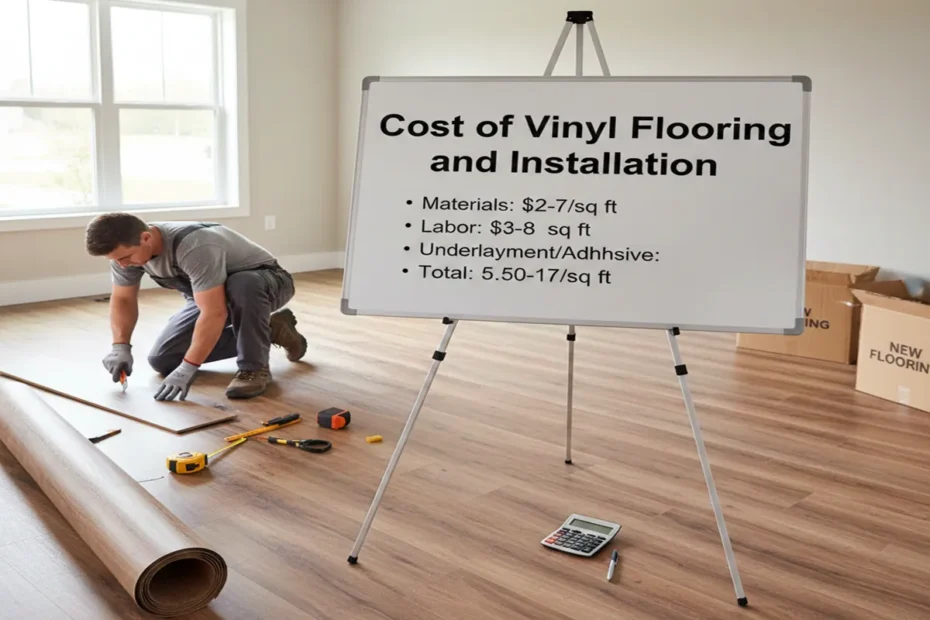
Vinyl flooring varies widely in quality and type from basic sheet vinyl to premium luxury vinyl planks (LVP) or tiles (LVT). As a result, the cost of vinyl flooring and installation per square foot typically falls in the range of $2 to $9.
Here’s how the scale generally works:
-
Sheet vinyl: Often priced around $0.50 to $3 per square foot for materials alone, with a total installed cost of roughly $1.50 to $6 per square foot when including labor.
-
Standard vinyl plank/tile: Materials usually run $2 to $7 per square foot. With labor, you might pay $3 to $11 per square foot for a fully installed job.
-
Luxury vinyl plank (LVP) / tile (LVT): These premium options often cost $3 to $10 per square foot for materials; installed, the price can run $4 to $13 per square foot, depending on quality and labor complexity.
As a rough rule of thumb: the more realistic and durable the vinyl (e.g., higher-end planks, heavier wear layer, waterproofing), the higher the cost but also the longer it will last.
What a Full Room Usually Costs
For typical home projects, the total cost of vinyl flooring and installation depends heavily on how many square feet you’re covering. For example:
-
A small 100-square-foot room could cost $200 – $900 total.
-
A medium 300-square-foot room might run about $600 – $2,700, depending on material quality.
-
A larger 500-square-foot job often lands in the ballpark of $1,000 – $4,500 when using mid-range vinyl and standard installation.
According to recent data, the average cost to install vinyl flooring across a typical home project is about $2,300 — though simpler or smaller jobs may cost far less.
What Raises (or Lowers) the Cost
The final bill depends on more than just floor size and vinyl type. Key factors that influence the cost of vinyl flooring and installation include:
-
Installation method: Vinyl can be installed as a floating floor (click-lock or interlocking), glue-down, or peel-and-stick. Floating floors are often cheaper and easier if your subfloor is already smooth.
-
Room layout and complexity: Irregular rooms, many corners, staircases, cabinets, or closets can increase labor time and, therefore, labor cost.
-
Prep work: If the existing floor needs removal, leveling, moisture barriers, or underlayment, that adds to both labor and materials.
-
Material quality and features: Thicker wear layers, waterproof cores, premium aesthetics, and brand reputation all push material costs higher, but often improve long-term durability and appearance
In short, a simple vinyl sheet on a well-prepared floor will cost far less than a premium LVP with ca omplex layout and subfloor preparation.
Why Vinyl Flooring Remains a Smart Choice
Despite the variety in cost, vinyl flooring continues to be one of the most cost-effective and practical flooring options homeowners choose. Some of the key advantages:
-
It offers durable, water-resistant floors, making it ideal for kitchens, bathrooms, basements, and high-traffic zones.
-
It can mimic the look of hardwood, stone, or tile, giving a high-end look without the price tag of real wood or stone.
-
It often costs much less than hardwood or natural stone, both in material and labor. For many families, vinyl delivers a premium look at a reasonable cost.
-
Because of the lower cost of vinyl flooring and installation, it’s a viable choice for major remodels or full-house flooring jobs without breaking the budget.
How to Get the Best Deal
If you’re considering vinyl flooring, here are some tips to keep costs reasonable while still getting a quality outcome:
-
Measure carefully: know your square footage before purchasing. Buying slightly more material than needed helps account for cuts and waste.
-
Get multiple quotes: reach out to several flooring contractors to compare labor and materials costs. Labor rates and skill levels vary widely.
-
Consider simpler installation methods: if your subfloor is in good shape, a floating/click-lock system can save money.
-
Balance quality and price: mid-range luxury vinyl often offers the best blend of durability, appearance, and cost. Ultra-budget vinyl may save money upfront, but it wears out sooner.
-
Plan for extra work: if there’s existing flooring to remove or subfloor work required, budget for those costs. Hidden expenses are common in flooring jobs.
Final Thoughts
If you’re trying to estimate what your next flooring project might cost, the rule is simple: begin with square footage, choose the vinyl type and installation method, then add labor and any prep work. On average, as many installers and experts report, a full job, including materials and labor, will fall somewhere between $2 and $9 per square foot, yielding a total of $600 to $4,500 for a medium-sized room, or more for larger areas.
Because vinyl allows for such wide variation from economy sheet vinyl to hardwood-look luxury planks, you can generally find a solution that fits your style and budget. The cost of vinyl flooring and installation stays competitive with its many benefits: durability, flexibility, aesthetic appeal, and value.
FAQs:
1. How much does vinyl flooring cost per square foot?
Vinyl flooring typically costs $2 to $9 per square foot installed, depending on material quality and labor rates.
2. What affects the cost of vinyl flooring and installation?
Key factors include vinyl type (sheet, LVP, LVT), room size, labor costs, subfloor prep, and installation method.
3. Is vinyl flooring cheaper than laminate or hardwood?
Yes. Vinyl is usually more affordable than laminate and significantly cheaper than hardwood, especially in installation costs.
4. How long does vinyl flooring last?
High-quality vinyl flooring can last 10 to 20 years, and premium luxury vinyl planks may last even longer with proper care.
5. Does vinyl flooring require professional installation?
Not always. DIY installation is possible with floating or click-lock vinyl, but professional installation ensures a better fit, durability, and finish.