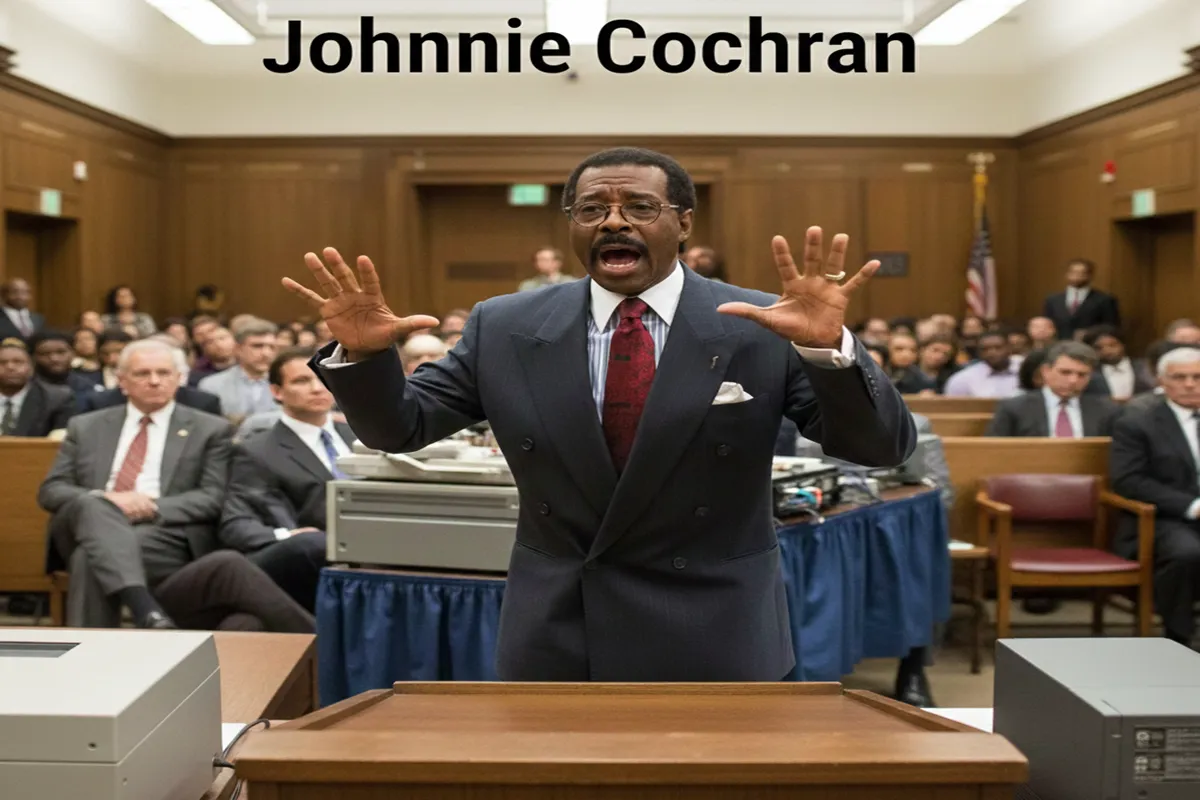
Johnnie Cochran was one of the most prominent and influential lawyers of the 20th century, known for his high-profile cases, especially the defense of O.J. Simpson. With his charismatic personality, razor-sharp legal mind, and unwavering commitment to justice, Cochran became a household name and a champion for civil rights. This article delves into the life, career, controversies, and lasting legacy of Johnnie Cochran, a man whose contributions to the legal world are still felt today.
Early Life and Education
Johnnie Lee Cochran Jr. was born on October 2, 1937, in Shreveport, Louisiana, to a working-class African American family. Raised in Los Angeles, Cochran attended Los Angeles High School, where he excelled academically and athletically. He went on to study at Loyola Marymount University, earning a degree in business administration. He later earned his law degree from the UCLA School of Law in 1962.
Cochran’s early life was shaped by the challenges of growing up in a segregated society. The experiences of racial discrimination and inequality motivated him to pursue a career in law, where he could help fight for justice and equality. His education at UCLA prepared him for the challenges ahead, providing him with the tools to navigate the legal landscape.
Breakthrough Legal Cases
Johnnie Cochran career was defined by his involvement in some of the most high-profile and controversial legal cases of the 20th century. Among these, the O.J. Simpson trial remains the most famous and pivotal.
The O.J. Simpson Trial
In 1994, former NFL star O.J. Simpson was charged with the murders of his ex-wife, Nicole Brown Simpson, and her friend, Ron Goldman. Cochran joined the defense team, where he became the lead attorney. His legal strategy was instrumental in securing Simpson’s acquittal. Cochran’s famous line, “If it doesn’t fit, you must acquit,” was a pivotal moment in the trial. It referred to the glove found at the crime scene, which appeared not to fit Simpson’s hand.
Cochran’s ability to connect with the jury, use media to his advantage, and his focus on racial issues, particularly allegations of police misconduct, were central to his defense strategy. His role in the trial cemented his place in American legal history, though it also sparked intense public debate about race, justice, and the American legal system.
Other Major Cases
Beyond the Simpson trial, Cochran’s legal career was marked by numerous other high-profile cases. Notably, he represented Geronimo Pratt, a Black Panther member who was wrongfully convicted of murder. Cochran successfully helped Pratt secure his release after a long legal battle, showcasing his commitment to fighting for racial justice.
Cochran also represented Toddlers’ victim cases and cases involving police brutality, building a reputation as a champion for the oppressed. His work on behalf of marginalized communities, particularly African Americans, made him an icon in the civil rights movement.
Advocacy for Civil Rights
From the very beginning of his career, Johnnie Cochran was dedicated to advocating for social justice. As a civil rights attorney, he used his legal skills to fight against racial injustice and police brutality.
Fighting for Justice
Cochran’s legal philosophy was rooted in his belief that the justice system often failed marginalized communities. He used his platform to expose the racial disparities in the legal system, particularly how Black Americans were unfairly targeted and discriminated against. His work in challenging police misconduct and fighting racial profiling made him a hero to many in the African American community.
Legacy in Civil Rights
Cochran’s advocacy extended beyond the courtroom. He was involved in numerous civil rights causes, including his work with the NAACP and other organizations. He believed that justice was not just about individual cases but about reforming an entire system that disproportionately affected people of color. His legacy continues in the ongoing fight for racial justice in America.
Personal Life and Personality
Johnnie Cochran charisma extended far beyond the courtroom. He was known for his confident, commanding presence and his ability to win over juries with his eloquence. His style was often described as smooth, but he was also known for his no-nonsense approach to getting results.
Family and Relationships
Cochran was married twice and had three children. He was devoted to his family and was known for being a loving father and husband. His personal life, though largely private, reflected the same values that he fought for in his professional life: justice, integrity, and a commitment to those he loved.
See Also: Johnnie Cochran Wife
Charitable Work
In addition to his legal work, Cochran was deeply involved in charitable activities. He contributed to various causes, including education, criminal justice reform, and support for young Black men and women aspiring to enter the legal profession. His foundation, the Johnnie L. Cochran Jr. Foundation, continues to support these causes today.
Impact on Legal Culture and Media
Johnnie Cochran influence extended far beyond the courtroom. He became a cultural icon, known for his mastery of the media and his ability to turn legal cases into public spectacles.
Media Presence
Cochran was one of the first attorneys to recognize the power of the media in high-profile cases. He skillfully used the press to shape public perception and to advocate for his clients. His appearances on television talk shows and news programs helped build his fame and solidified his place in American pop culture.
Cultural Impact
Cochran’s legacy as a media-savvy lawyer made him a fixture in American entertainment. He became a symbol of Black excellence in law and was frequently referenced in TV shows, films, and books. His ability to navigate both the legal and media landscapes redefined how lawyers engage with the public and use media to further their causes.
Controversies and Criticisms
Despite his success, Johnnie Cochran was not without controversy. His role in the O.J. Simpson trial drew significant criticism from both the media and the public. Many felt that he played to racial tensions in a way that overshadowed the legal aspects of the case. Critics argued that his focus on race and police misconduct detracted from the evidence against Simpson.
Ethical Concerns
Some of Cochran’s ethical choices, particularly his use of the media during the Simpson trial, were seen as manipulative by some observers. However, his supporters argued that his tactics were necessary to level the playing field in a system that often discriminated against African Americans.
Public Perception
Cochran’s status as a controversial figure did not detract from his influence. While some criticized his methods, others viewed him as a fearless advocate for the underdog. He remains a polarizing figure in legal history, but his contributions to civil rights and justice cannot be ignored.
Johnnie Cochran Legacy
Johnnie Cochran passed away on March 29, 2005, after a battle with brain cancer. However, his legacy endures.
After His Death
Even after his passing, Cochran’s influence continues to be felt in the legal world. His work on high-profile cases helped set new standards for legal strategy and media management in the courtroom. He is remembered as a trailblazer for African American lawyers and an advocate for social justice.
Influence on Future Generations
Cochran’s career paved the way for future generations of minority lawyers who aspire to make a difference. His legacy lives on in the form of young lawyers who follow in his footsteps, fighting for justice in the courtroom and outside of it.
Conclusion
Johnnie Cochran was more than just a lawyer; he was a symbol of justice, an advocate for the oppressed, and a master of the media. His contributions to the legal field, particularly his role in landmark cases like the O.J. Simpson trial, have shaped the landscape of modern law. His dedication to civil rights and his tireless fight for justice have left an indelible mark on both the legal profession and society at large.
See Also: Johnnie Cochran Net Worth
FAQs:
1. Who was Johnnie Cochran?
Johnnie Cochran was a famous American lawyer, known for his role in high-profile cases like the O.J. Simpson trial and his advocacy for civil rights.
2. What was Johnnie Cochran role in the O.J. Simpson case?
Cochran was the lead defense attorney in the O.J. Simpson case, where he famously used the phrase, “If it doesn’t fit, you must acquit,” securing Simpson’s acquittal.
3. What was Johnnie Cochran approach to civil rights law?
Cochran was dedicated to fighting racial injustice, particularly police brutality, and used his legal expertise to challenge systemic inequality in the justice system.
4. Why is Johnnie Cochran considered a legal legend?
Cochran’s legal brilliance, particularly in high-profile cases, and his ability to influence public opinion have solidified his place as one of the most iconic attorneys in history.
5. What controversies surrounded Johnnie Cochran career?
Cochran faced criticism for his aggressive use of the media and his focus on racial issues during the O.J. Simpson trial, though many view his approach as necessary to fight systemic racism.